
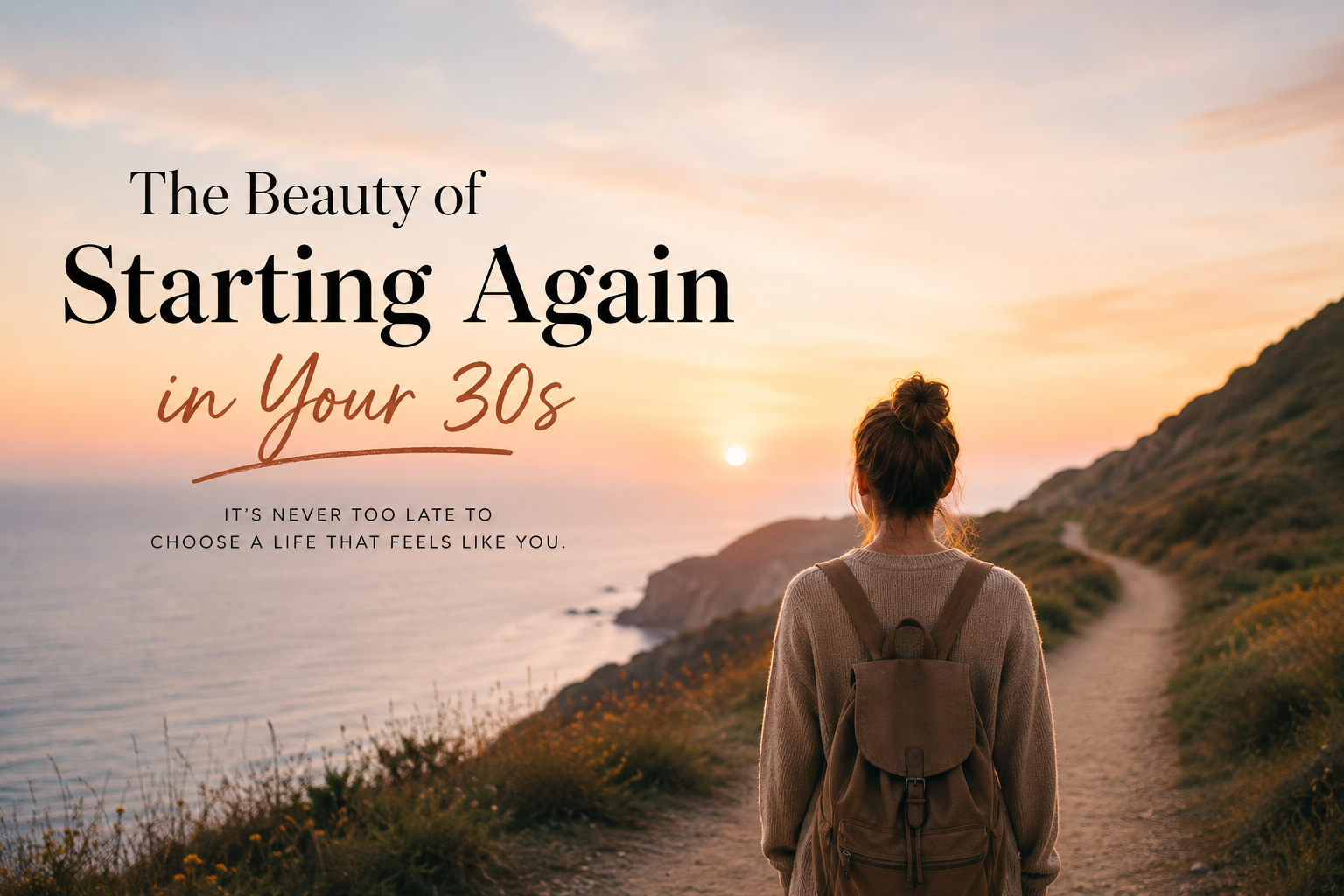
Introduction
There is something oddly uncomfortable about being in your 30s and realizing your life no longer fits you.
Not dramatically. Not in the movie-scene kind of way where someone quits their job in the rain and books a one-way ticket somewhere. Usually it happens quietly. During a Monday morning meeting that suddenly feels unbearable. Or while sitting beside people you love but somehow feeling far away from yourself.
A lot of us grow up believing our 30s are supposed to look stable. Settled. Clear.
You pick a career. You become good at it. You build routines. Maybe you marry. Maybe you buy furniture you never imagined caring about. Maybe you learn how to make decent coffee at home and stop texting people back at 2 a.m.
From the outside, it can all look fine.
And yet, somewhere in the middle of ordinary life, many people discover they want to begin again.
Not because they failed. Sometimes because they finally became honest.
Starting over in your 30s has a strange reputation. People talk about it like it’s either inspiring or tragic. But most of the time, it’s neither. It’s just deeply human.
And honestly, it can also be beautiful.
The Myth That Everyone Else Has It Together
One of the hardest parts about starting over in your 30s is the feeling that you’re late.
You look around and everyone appears settled into their lives. Someone is getting promoted. Someone just bought a house. Someone else is posting anniversary photos with captions about “building this beautiful life together.”
Meanwhile, you’re sitting on your bed at midnight wondering if you chose the wrong profession five years ago.
The strange thing is that many people are quietly questioning their lives at the same time. They just don’t announce it publicly.
A friend might look successful and still feel trapped. Someone in a stable relationship may secretly feel disconnected. Another person might have the career they dreamed about at 22 and still dread Monday mornings.
People become very skilled at performing certainty.
Your 30s are often the decade where appearances begin separating from reality.
You start noticing how many adults are improvising their way through life while pretending they have a long-term plan.
That realization can feel disappointing at first. Then oddly comforting.
Starting Over Rarely Looks Dramatic
Most reinventions are small and uncinematic.
A woman quietly applies for jobs in a different field during her lunch break.
A man deletes dating apps after realizing he keeps chasing people who emotionally exhaust him.
Someone starts therapy after years of insisting they were “fine.”
Another person moves back to their hometown temporarily because they are financially burned out and tired of pretending otherwise.
This is the part nobody romanticizes enough. Starting over often begins with humility.
Sometimes your ego takes a hit.
You may have to admit you built parts of your life around survival instead of joy. Or status instead of meaning. Or fear instead of honesty.
That realization stings a little.
But there is also relief in finally telling yourself the truth.
Your 30s Make You Less Interested in Pretending
In your 20s, many decisions are shaped by performance.
You want to seem successful. Interesting. Attractive. Ambitious. Different from everyone else.
There’s nothing wrong with that. It’s part of growing up.
But your 30s slowly wear down certain illusions.
You realize impressive jobs do not automatically make people happy.
You realize some relationships survive mostly because both people are afraid to leave.
You realize burnout can make even exciting opportunities feel empty.
And perhaps most importantly, you stop wanting to build a life that only looks good from the outside.
That shift changes everything.
Starting over in your 30s often comes from exhaustion with pretending.
You become less willing to spend years performing a version of yourself that no longer feels real.
The Quiet Grief of Outgrowing Your Old Life
People don’t talk enough about the grief involved in personal change.
Even positive change comes with loss.
If you change careers, you may lose the identity attached to your old work. If you leave a relationship, you lose routines and shared history. If your worldview changes, certain friendships may slowly fade because you no longer connect the same way.
Sometimes you even grieve old versions of yourself.
The younger self who tolerated things you would never tolerate now. The self who stayed too long. The self who thought achievement would fix loneliness.
Growth sounds uplifting in theory, but in reality it can feel disorienting.
There are moments during major life transitions where you feel suspended between versions of yourself. No longer who you were, but not fully who you’re becoming either.
That in-between stage can feel lonely.
But it is also where some of the most important inner shifts happen.
Why Starting Over in Your 30s Feels More Intentional
There’s a difference between experimenting in your 20s and rebuilding in your 30s.
By your 30s, you usually know yourself better. Or at least you know what no longer works.
You know which environments drain you.
You know what kinds of people leave you emotionally exhausted.
You know how expensive burnout becomes.
You know what loneliness feels like inside the wrong relationship.
You also know time matters more than you once thought.
That awareness changes your decisions.
People who start over in their 30s are often doing it with clearer eyes. Less fantasy. Less ego. More honesty.
It’s not reckless reinvention.
It’s usually careful reconstruction.
The Unexpected Freedom of Not Being Twenty Anymore
Oddly enough, getting older can make you braver.
Not always outwardly. But internally.
In your 20s, rejection can feel catastrophic because identity still feels fragile. You care deeply about how others perceive your choices.
By your 30s, something shifts.
You become slightly less interested in winning universal approval.
Not completely, obviously. Most people still care what others think. But the grip weakens.
You stop wanting to explain every decision.
You realize some people will misunderstand your choices no matter how carefully you justify them.
And honestly, that realization can be freeing.
There’s freedom in waking up one day and admitting:
“I actually don’t want the life I thought I was supposed to want.”
That sentence changes people.
Social Media Makes Starting Over Feel Harder
One reason starting over in your 30s feels emotionally complicated is because modern life constantly exposes you to curated milestones.
Someone announces an engagement.
Someone else posts vacation photos from Greece.
Another person shares their startup success story with carefully edited vulnerability.
Meanwhile, you’re updating your résumé at 1 a.m. wondering if you should leave your stable job.
Comparison distorts reality.
You rarely see the debt behind the lifestyle. Or the anxiety behind the achievement. Or the loneliness inside the polished relationship.
And honestly, many people are terrified they made irreversible choices.
They just hide it well.
The internet has made adulthood feel strangely performative. People document outcomes more than confusion.
But confusion is a real part of adult life.
Probably a larger part than most admit.
Reinvention Does Not Require Ruining Your Entire Life
This matters because people often think starting over means destroying everything.
It usually doesn’t.
Sometimes reinvention is dramatic. But often it’s gradual.
You take evening classes while keeping your current job.
You become more emotionally honest in relationships.
You slowly rebuild your health after years of neglecting it.
You start writing again after convincing yourself you were too old to be creative.
You move toward a different life in small, consistent ways.
Tiny shifts matter more than dramatic declarations.
A lot of real change happens quietly, almost invisibly at first.
There Is Something Beautiful About Choosing Yourself Later in Life
Maybe this is the real beauty of starting over in your 30s.
You are no longer building a life based entirely on fantasy.
You’ve seen disappointment now. You’ve failed at things. You’ve stayed too long in situations that drained you. You’ve probably made decisions you wouldn’t make again.
But because of that, your choices become more grounded.
There’s dignity in beginning again with open eyes.
There’s courage in admitting:
“This version of my life is not working anymore.”
And there’s something deeply human about refusing to stay emotionally asleep just because leaving would be inconvenient.
A lot of people remain stuck simply because change feels embarrassing.
But embarrassment passes.
Living dishonestly tends to linger much longer.
Conclusion
Starting over in your 30s is rarely clean or glamorous.
Sometimes it involves confusion, financial stress, awkward conversations, or long periods where nothing feels certain. You may question yourself repeatedly. You may wonder whether you’re making a mistake.
That’s normal.
Still, there is quiet beauty in allowing yourself to evolve instead of forcing yourself to remain loyal to a life that no longer fits.
Your 30s are not too late to change direction.
They are often the first decade where your decisions begin coming from deeper self-awareness instead of social momentum.
And honestly, that can lead somewhere far more meaningful than simply getting everything “right” the first time.
FAQs
Is starting over in your 30s normal?
Yes. Far more normal than people admit publicly. Many people change careers, relationships, priorities, or lifestyles during their 30s because this is often when deeper self-awareness develops.
Why does starting over in your 30s feel scary?
Because by your 30s, choices often carry more responsibility. Financial pressure, family expectations, and fear of judgment can make change feel riskier. But staying in an unhappy situation also has long-term costs.
Is 30 too late to rebuild your life?
No. Thirty is not late. Many people begin meaningful careers, relationships, creative pursuits, or personal growth journeys well after 30. Real life rarely follows a perfect timeline.
0 Comments