
Introduction
Most people imagine mental health support as something big.
Therapy. A long vacation. Quitting a stressful job. A complete lifestyle reset.
And sometimes those things matter. Sometimes they are necessary.
But honestly, a surprising amount of emotional stability comes from smaller things people barely notice while they’re doing them.
Making tea the same way every morning. Watering plants before opening notifications. Walking to the nearby store without headphones. Folding clothes before bed. Sitting quietly for ten minutes after everyone else is asleep.
Tiny rituals rarely look impressive from the outside. Nobody posts them online as breakthroughs. They don’t feel productive enough to brag about.
Yet these ordinary habits often become the threads holding difficult weeks together.
A lot of people only realize this after their routines disappear. Travel disrupts sleep. Stress piles up. Life becomes chaotic. Suddenly even brushing your hair or eating lunch at the right time feels strangely difficult. The mind becomes noisier when the body loses rhythm.
That’s the part people underestimate.
Mental health is not only shaped by major emotional events. It is also shaped by repetition. By what your nervous system keeps returning to every day.
And sometimes healing starts there too.
The Mind Likes Predictability More Than We Admit
People often describe healthy daily habits as discipline, but many rituals are actually forms of reassurance.
Your brain gets tired from uncertainty. Decisions drain energy. Constant stimulation keeps the nervous system alert even when nothing dangerous is happening.
A small repeated action can interrupt that state.
There’s a reason some people light the same candle every evening or clean the kitchen before sleeping even after exhausting days. It creates a sense of continuity. Something familiar. Something completed.
Not everything in life feels manageable. But maybe the coffee gets made the same way every morning. Maybe the bedsheet gets straightened before work. Maybe there’s music playing while vegetables are chopped at night.
These actions sound small because they are small.
But emotionally, they tell the brain: life is still functioning.
That message matters more than people think.
Healthy Daily Habits Are Often Emotionally Practical
A lot of wellness advice sounds exhausting because it tries to overhaul someone’s personality.
Wake up at 5 AM. Journal for an hour. Meditate perfectly. Optimize everything.
Most people do not live like that. And honestly, many do not need to.
Healthy daily habits become sustainable when they fit inside real life instead of fighting it.
For one person, that might mean taking ten quiet minutes before checking messages. For another, it could simply be eating breakfast without standing near the sink scrolling through bad news.
One of the most underrated habits is reducing emotional noise in small ways.
Not every moment needs input.
Some people leave the television running all day because silence feels uncomfortable. Others listen to podcasts every waking minute. The brain never fully lands anywhere.
Then eventually they wonder why they feel mentally crowded.
There’s something deeply regulating about small pockets of stillness. Not dramatic silence. Just ordinary pauses.
Waiting for rice to cook without reaching for the phone.
Sitting near a window for a few minutes after work.
Walking slowly instead of rushing for once.
These moments do not solve trauma or erase anxiety. But they soften the nervous system little by little.
That counts.
Rituals Give Shape to Difficult Days
One difficult thing about emotional struggles is how shapeless time becomes.
When people are overwhelmed, days blur together. Sleep schedules drift. Meals become random. Hours disappear online without feeling restful.
Rituals create gentle structure when motivation disappears.
Not strict productivity systems. Just anchors.
A woman I once knew went through a brutal period after losing a family member. She said the only thing that kept her somewhat grounded was making soup every evening. Not because soup fixed grief. It didn’t.
But chopping vegetables at 7 PM gave the day edges. A beginning. A middle. An end.
That stayed with me.
Humans need rhythm during emotionally uncertain periods. Without it, the mind can start floating in unhealthy directions.
Even basic routines like opening curtains in the morning help more than people realize. Light affects mood. Movement affects thought patterns. Small acts influence emotional momentum.
The body and mind are less separate than people pretend.
Some Rituals Quietly Rebuild Self-Respect
This part is rarely discussed.
Certain habits are not about efficiency. They are about self-regard.
There’s a subtle emotional difference between collapsing into bed wearing yesterday’s clothes and taking five minutes to wash your face properly before sleep.
The action itself is small. The emotional message underneath is bigger.
It says: I am still worth caring for even when I feel terrible.
That matters during hard seasons.
People with burnout or depression often stop doing basic nurturing routines first. Laundry piles up. Meals become careless. Water intake disappears. Sleep gets ignored.
It’s not laziness. Usually it’s emotional depletion.
Which is why rebuilding tiny habits can become surprisingly meaningful.
Not because they turn someone into a perfect version of themselves. But because they slowly restore participation in life.
Even opening the windows every morning can shift something emotionally. The room feels less stagnant. The body notices daylight. The day begins instead of just happening.
That kind of care looks ordinary. But ordinary care is still care.
The Internet Sometimes Makes Simple Living Look Boring
There’s pressure now to constantly improve yourself in visible ways.
Everything becomes content. Morning routines become performances. Wellness becomes aesthetic branding.
But real healthy daily habits are often deeply unremarkable.
Nobody films themselves quietly stretching because their back hurts from stress. Nobody romanticizes taking medication on time or going to bed early because they know tomorrow will be emotionally heavy.
Yet those habits are real acts of maintenance.
Sometimes the healthiest thing a person can do is repeat a stable routine long enough for their nervous system to stop expecting chaos.
That doesn’t look exciting online.
But emotionally, stability is underrated.
A peaceful routine can feel almost unfamiliar to people who spent years in stress, conflict, unpredictability, or emotional survival mode. Calmness can initially feel boring because the body got used to stimulation.
That adjustment takes time.
Tiny Rituals Create Moments of Return
One reason daily rituals matter is because they pull attention back into the present.
Mental distress often pulls people elsewhere.
Into regrets. Fear. Rumination. Imagined conversations. Worst-case scenarios.
But repetitive physical actions reconnect the mind to the body.
Brewing tea. Folding towels. Sweeping the floor. Watering plants.
There’s something grounding about using your hands for ordinary tasks. Not every moment of healing comes through deep emotional insight. Sometimes it comes through re-entering physical life again.
You notice the smell of soap. The sound of rain outside. Steam rising from food.
The nervous system settles slightly.
Not dramatically. Just enough.
And honestly, enough is sometimes enough for one day.
Not Every Ritual Has to Be Healthy in the Traditional Sense
Some rituals simply make life feel softer.
Watching the same comforting show before sleep. Calling one specific friend during evening walks. Buying fresh flowers once a week even when money is tight. Listening to old songs while cleaning.
People dismiss these things because they seem emotionally unnecessary.
But humans need emotional texture, not just efficiency.
Life becomes emotionally dry when every action exists only for productivity.
A meaningful routine is often less about optimization and more about emotional familiarity. It becomes a quiet signal that says: this is home, this is rest, this is mine.
And during stressful periods, familiar comforts can stabilize people more than aggressive self-improvement plans.
Conclusion
Mental health is complicated. No small routine magically fixes loneliness, trauma, grief, anxiety, or burnout.
But daily rituals do something quieter.
They reduce friction. They soften emotional chaos. They help people return to themselves in small repeated ways.
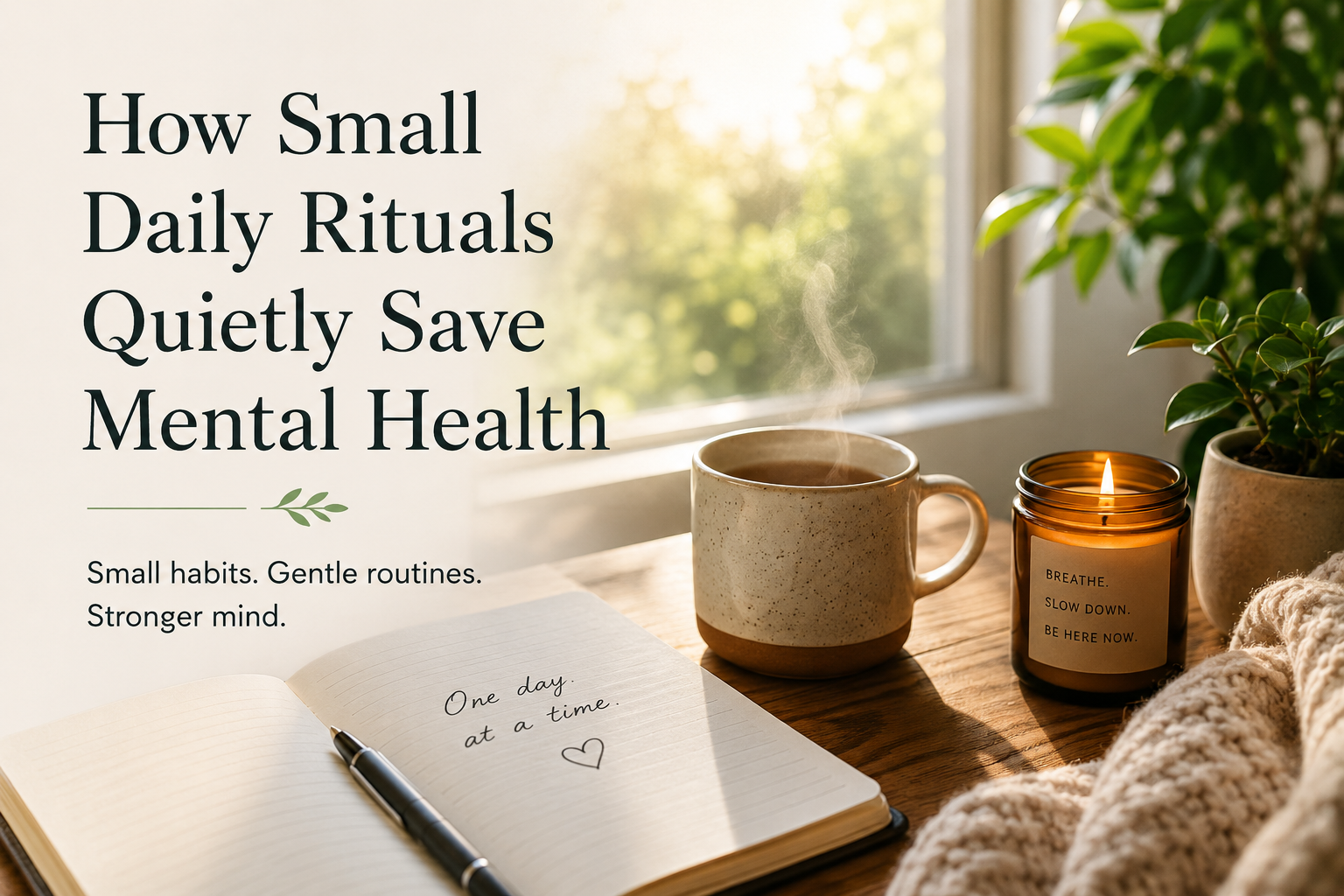
A cup of tea at the same hour. A morning walk. Music while cooking. Stretching before bed. Opening the curtains. Writing a few thoughts down before sleeping.
These things look almost invisible from the outside.
Still, they matter.
Because a stable life is usually not built through dramatic transformations. It is built through repeated ordinary actions that slowly make the mind feel safer inhabiting daily life again.
And honestly, some days that quiet kind of support is what keeps a person going.
FAQs
What are healthy daily habits for mental health?
Healthy daily habits can include regular sleep, eating meals consistently, short walks, limiting constant screen time, journaling, staying hydrated, and creating calming routines. They do not need to be complicated to help emotional well-being.
Why do small routines help with anxiety?
Small routines create predictability, which helps calm the nervous system. Repeated familiar actions can reduce mental overload and make stressful days feel more manageable.
How long does it take for daily habits to improve mental health?
It varies from person to person. Some habits create small emotional relief quickly, while deeper changes happen gradually over weeks or months. Consistency matters more than intensity.
0 Comments