
Introduction
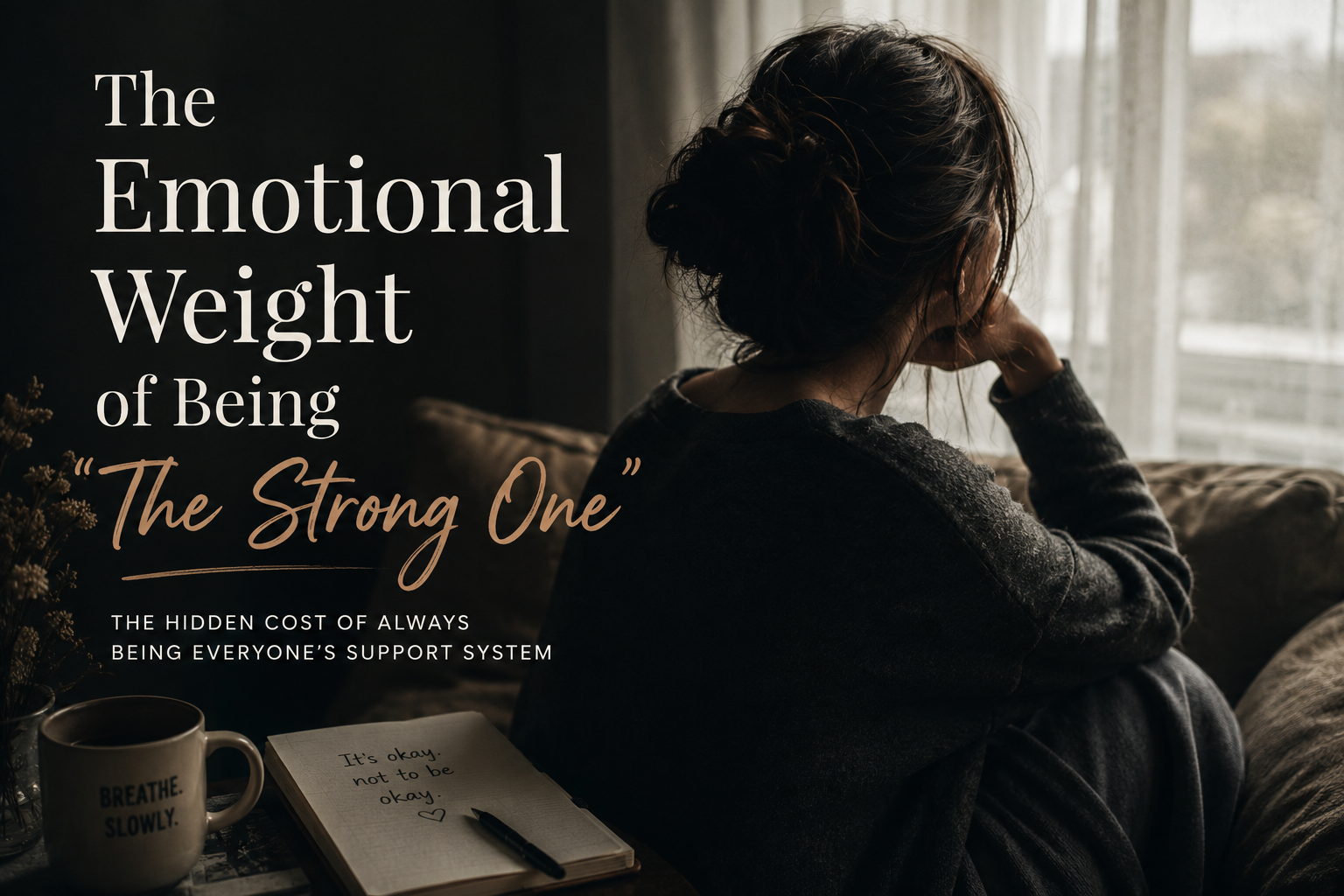
Every family seems to have one person who keeps things together.
The one who stays calm during arguments. The one people call during emergencies. The one who listens patiently, gives practical advice, remembers birthdays, pays attention to everyone’s moods, and somehow still manages to ask, “Are you okay?” even when nobody asks them the same question back.
People admire them for it.
Sometimes they even admire themselves for it, at least in the beginning.
Being “the strong one” can feel meaningful. It gives you a role. A sense of usefulness. You become dependable, and dependence can feel a lot like love when you’ve spent years trying to earn your place in people’s lives.
But emotional burnout rarely arrives dramatically. It doesn’t usually look like collapsing on the floor or having a cinematic breakdown in the rain. Most of the time, it enters quietly.
You stop answering messages for a few hours longer than usual.
Small conversations start feeling exhausting.
You become oddly irritated by harmless things.
Someone asks for one more favor, and internally you feel this strange heaviness you can’t explain.
Not anger exactly. Just… tired.
A tiredness that sleep doesn’t fully fix.
And one of the loneliest parts about emotional burnout is this: people often continue seeing you as strong long after you’ve stopped feeling strong inside.
The Problem With Always Being Reliable
There’s a subtle pressure that comes with being emotionally dependable.
Once people get used to your stability, they unconsciously expect it from you forever.
You become the calm person. The practical person. The mature one.
And after a while, you start performing that role automatically, even on days when you barely have enough energy to carry yourself through the afternoon.
You answer calls while emotionally drained.
You comfort others while quietly falling apart yourself.
You say “It’s fine” because explaining your actual feelings sounds too complicated.
Some people learn this behavior early in life. Maybe they grew up in homes where emotions had to be managed carefully. Maybe they became the peacemaker in the family. Maybe they learned that being useful was safer than being vulnerable.
So they adapted.
They became emotionally competent before they were emotionally cared for.
That pattern often follows people into adulthood.
Friends lean on them. Partners rely on them. Coworkers trust them with difficult situations because they “handle things well.”
And to be fair, they usually do.
Until they don’t.
Emotional Burnout Doesn’t Always Look Dramatic
A lot of people imagine burnout as something obvious. They picture complete exhaustion or visible breakdowns.
But emotional burnout can look surprisingly ordinary.
You still go to work.
You still reply to messages.
You still show up to birthdays and family dinners.
You laugh at jokes. You participate in conversations. You function.
But internally, everything feels heavier than it used to.
Simple decisions become tiring.
You begin craving silence in a way you can’t explain.
Sometimes you even feel guilty for being around people who need you emotionally, because you know you have nothing left to give.
And then comes the strange numbness.
Not sadness exactly. Not even depression necessarily. Just emotional flatness.
You stop reacting fully to things. Good news doesn’t feel exciting. Bad news feels distant. Your emotional range narrows because your mind is trying to conserve energy the same way a phone switches to low power mode.
People often miss this stage because outwardly, you still seem functional.
That’s the dangerous part.
When Everyone Feels Safe Leaning on You
One thing people rarely talk about is how isolating emotional strength can become.
When you are known as the stable person, others sometimes forget you need support too.
Not intentionally. Most people aren’t cruel about it.
They simply assume you’re okay because you always appear okay.
And over time, you may accidentally train people not to check on you.
You become the helper, not the helped.
The listener, not the one who speaks.
There’s also a strange embarrassment that comes with finally needing support after years of being independent. You start thinking things like:
“I shouldn’t be struggling this much.”
“Other people have bigger problems.”
“I’m supposed to handle this.”
So instead of opening up honestly, you minimize yourself.
You say you’re “just tired.”
You joke about being stressed.
You change the subject.
Meanwhile, your mind feels crowded all the time.
The Hidden Anger Beneath Exhaustion
People experiencing emotional burnout sometimes become quieter. Others become irritable.
Not because they suddenly turned into bad people, but because exhaustion changes how emotions come out.
When someone spends years carrying emotional weight without enough rest or reciprocity, resentment can slowly build underneath the surface.
Not explosive resentment.
A quieter version.
The kind that appears when you realize people know how to rely on you but don’t really know how to care for you.
You start noticing imbalance everywhere.
Who always initiates conversations.
Who remembers details.
Who checks in first.
Who absorbs emotional tension in every room.
And eventually, even small requests can feel unfair.
That realization can be uncomfortable because many strong people genuinely love helping others. They are compassionate by nature.
But compassion without boundaries becomes self-erasure after a while.
There’s a difference between being caring and becoming emotionally available to everyone at the expense of yourself.
A lot of emotionally burnt-out people don’t notice they crossed that line until they’re already exhausted.
Why Some Strong People Struggle to Ask for Help
It sounds simple from the outside.
“Why don’t they just talk to someone?”
But emotional habits formed over years are difficult to undo overnight.
Some people fear becoming a burden because they spent most of their life trying not to be one.
Others worry that vulnerability will change how people see them.
If you’ve spent years being “the capable one,” admitting you’re overwhelmed can almost feel like losing your identity.
There’s also the fear of disappointing people.
Because once others depend on your strength, your exhaustion can feel inconvenient to them, even if they don’t mean it that way.
Sometimes the strong person finally says, “I’m not doing well,” and the response is awkward silence or quick advice instead of genuine emotional presence.
That experience teaches them to retreat again.
So they go back to functioning.
Back to smiling politely.
Back to carrying things quietly.
Rest Is Not Always Physical
One difficult thing about emotional burnout is that physical rest alone often doesn’t solve it.
You can sleep eight hours and still feel emotionally exhausted.
Because the fatigue isn’t only coming from activity. It’s coming from constant emotional management.
Monitoring everyone’s feelings.
Keeping peace in relationships.
Staying composed during stress.
Being emotionally available at all times.
Even anticipating other people’s needs before they ask.
That level of emotional vigilance drains people slowly.
Sometimes what the nervous system actually needs is relief from responsibility for a while.
Not disappearing forever. Not abandoning people.
Just moments where you are not required to hold everything together.
Moments where you can be uncertain, emotional, unproductive, or even disappointing without feeling guilty about it.
That kind of rest is harder to access than sleep.
Learning to Be Seen Honestly
One of the hardest adjustments for emotionally burnt-out people is learning to stop performing strength constantly.
Not dramatic vulnerability. Not oversharing with everyone.
Just honesty.
Saying “I don’t have the energy for that today.”
Admitting you’re overwhelmed before reaching a breaking point.
Allowing trusted people to support you instead of automatically saying, “I’m fine.”
It sounds small, but for people who spent years surviving through competence, this can feel deeply unnatural.
There’s also grief involved sometimes.
Grief over realizing how long you ignored yourself.
Grief over relationships where you were valued mainly for what you provided emotionally.
And grief over the version of yourself that believed being needed was the same thing as being cared for.
That realization can sting a little.
But it can also change things.
Because eventually, many people discover that constantly being the strong one leaves very little room to simply be human.
Conclusion
There’s nothing wrong with being dependable. Some of the kindest people in the world are the ones others naturally lean on during difficult times.
But emotional burnout happens when strength stops being a choice and starts becoming a permanent role.
Nobody can carry emotional weight endlessly without consequences.
Not quietly. Not gracefully. Not forever.
Sometimes the strongest thing a person can do is admit they are tired before exhaustion hardens into numbness.
And honestly, most people who always appear strong are not asking for someone to rescue them. They usually don’t even want grand gestures.
They just want a space where they don’t have to hold everything together for a little while.
A space where they can stop performing resilience and simply exist as a person who also gets overwhelmed sometimes.
That’s not weakness.
That’s being human.
FAQs
What is emotional burnout?
Emotional burnout is a state of mental and emotional exhaustion caused by prolonged stress, emotional pressure, or constant caregiving. It often includes numbness, irritability, fatigue, and feeling emotionally drained even after rest.
Why do strong people experience emotional burnout?
People who are seen as emotionally strong often suppress their own needs while supporting others. Over time, carrying everyone else’s emotional weight without enough support or boundaries can lead to emotional burnout.
How do you recover from emotional burnout?
Recovery usually involves emotional rest, healthier boundaries, honest communication, and reducing constant emotional responsibility. In some cases, therapy or supportive relationships can help people process long-term exhaustion and stress.
0 Comments