
Introduction
There’s a particular kind of silence that shows up after a long day of being “productive.”
You finish work. Reply to messages. Maybe scroll for a while without really looking at anything. You heat food, watch half an episode of something, and suddenly it’s midnight. The day felt full, but somehow not meaningful. You talked to people, technically. You answered emails. Maybe even laughed at a meme someone sent you.
Still, something feels strangely empty.
A lot of people carry this feeling around quietly. Not dramatic loneliness. Not the kind that looks obvious from the outside. More like a low background hum that never completely leaves. And because modern life rewards busyness so aggressively, it becomes easy to confuse movement with connection.
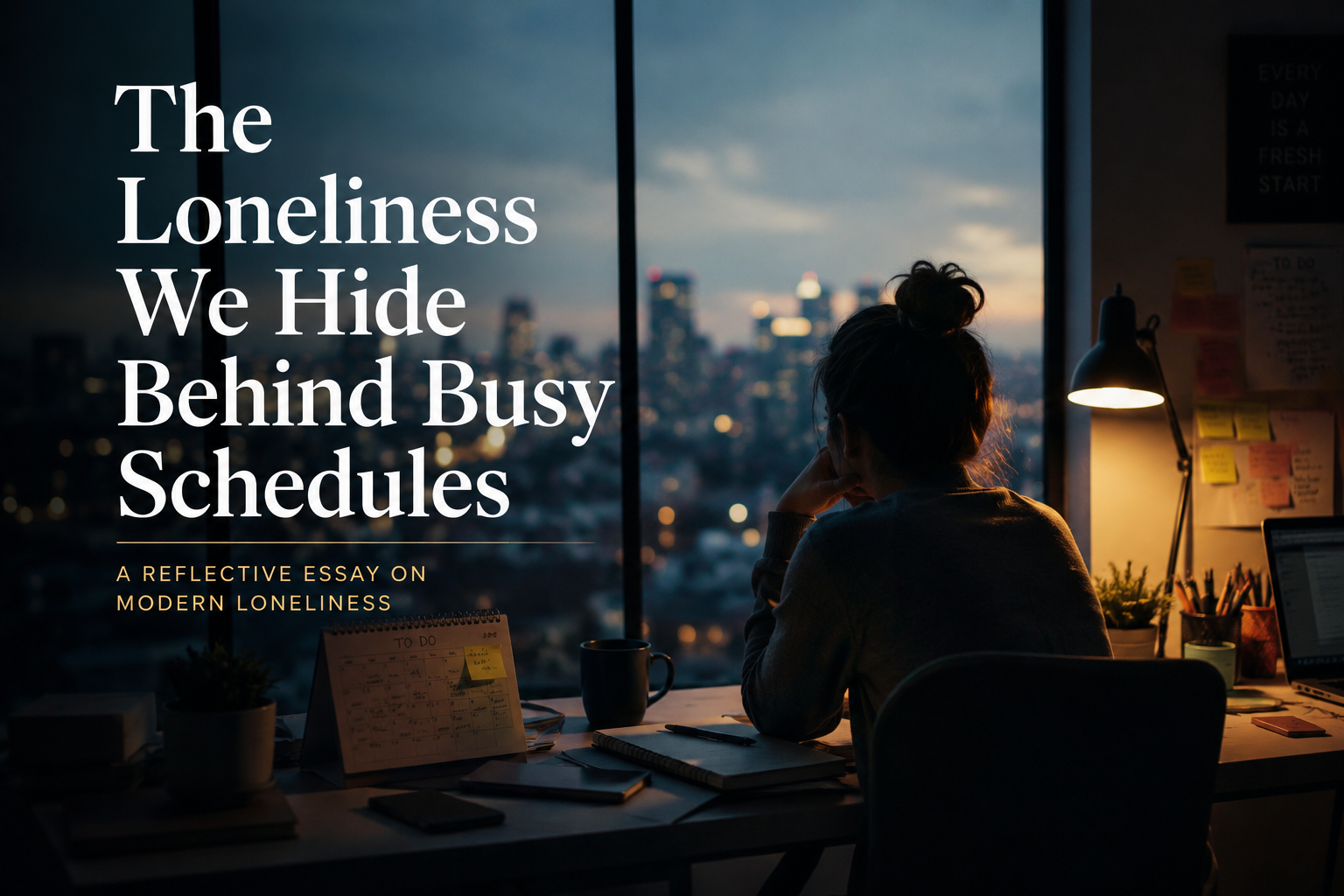
That’s part of what makes modern loneliness difficult to talk about. It rarely looks like isolation anymore. Sometimes it looks like a packed calendar, constant notifications, and a life that appears socially active from a distance.
You can spend an entire week interacting with people and still feel emotionally untouched by any of it.
When Busy Becomes a Personality
At some point, being busy stopped being temporary and became an identity.
People say “I’ve been so busy” almost automatically now. Sometimes before the conversation even properly starts. It works as explanation, apology, and social currency all at once. If you’re overwhelmed, it means you matter. It means people need you. Your time is valuable.
But underneath that, there’s often another truth people don’t say out loud.
Staying busy can protect you from noticing what’s missing.
A completely open evening can feel uncomfortable when you’re not used to sitting with yourself. That quiet space leaves room for questions people avoid during the day. Questions about relationships becoming shallow. About friendships that now exist mostly through reactions and short voice notes. About how long it’s been since someone asked how you were and actually waited for the real answer.
So instead, we fill the gaps.
More work. More errands. More content. More noise.
None of these things are inherently bad, obviously. But there’s a difference between having a full life and constantly distracting yourself from emotional emptiness.
A lot of people don’t notice when they cross that line.
The Strange Exhaustion of Constant Connection
One of the oddest things about modern loneliness is that people are technically more reachable than ever.
You can message someone instantly. Share photos in real time. Send voice notes from grocery store aisles. Watch what old classmates ate for dinner without speaking to them for five years.
And yet many conversations now feel strangely weightless.
You probably know the feeling. Talking all day without really saying anything. Endless small updates. Surface-level checking in. Sending posts back and forth instead of actual thoughts.
Sometimes friendships slowly turn into content-sharing arrangements.
There’s also a kind of fatigue that comes from always being socially available. Notifications create the illusion of closeness, but emotional intimacy still requires time and attention. It requires pauses. Longer conversations. Moments where people aren’t multitasking through each other.
Modern communication rarely leaves room for that.
Even phone calls have started to feel oddly formal. Many people text before calling now, almost like asking permission to briefly interrupt the machinery of someone else’s schedule.
And honestly, it makes sense. Everyone seems tired.
Loneliness Doesn’t Always Look Sad
This part gets overlooked a lot.
Loneliness is not always visible.
Some lonely people are funny in groups. Some host dinners. Some post regularly online. Some are successful enough that nobody imagines they could feel disconnected from anyone.
You can be surrounded by people and still feel emotionally unseen.
That feeling usually has less to do with the number of relationships and more to do with how safe you feel inside them. There’s a difference between being included and being understood.
A person can spend years performing a version of themselves that functions socially while quietly feeling detached underneath it.
Sometimes modern loneliness comes from constantly editing yourself.
Keeping conversations light. Avoiding vulnerability because everyone already seems overwhelmed. Turning every serious feeling into humor before it becomes uncomfortable.
People get very skilled at this.
You notice it during late-night conversations sometimes. Someone casually admits they haven’t felt close to anyone in months, then immediately laughs afterward like they revealed too much.
Those moments pass quickly, but they linger in your mind later.
The Friendship Drift Nobody Talks About Properly
Adult friendships change in ways people rarely prepare you for.
Not because of dramatic fights most of the time. Just gradual drifting. Delayed replies becoming normal. Plans happening less often. Life getting fuller around the edges until maintaining closeness starts requiring actual effort instead of proximity.
School and college accidentally created connection through repetition. You kept seeing people. Shared spaces did most of the work.
Adult life doesn’t really do that.
Now friendships compete with work exhaustion, family responsibilities, financial stress, long commutes, and the simple desire to rest after surviving the week.
People still care about each other. That’s the strange part. The affection often remains even while the relationship weakens.
You think about messaging someone for three days and somehow still don’t do it.
Not out of malice. Just mental clutter. Fatigue. Time slipping away faster than expected.
Then suddenly it feels awkward because too much time has passed.
Modern loneliness often grows quietly inside these small delays.
Why Solitude Feels Different Now
There’s a healthy kind of solitude that feels restorative. Most people actually need some amount of it.
But modern solitude can feel oddly crowded.
Even when alone, people are constantly consuming other people’s lives through screens. Opinions, photos, podcasts, videos, updates. Your brain never fully settles into stillness because there’s always another thing entering your attention.
Which means many people are rarely physically alone but almost never emotionally present either.
Boredom used to create reflection. Now it usually creates scrolling.
There’s also less separation between public and private life. Work messages arrive at night. Social media collapses strangers, acquaintances, coworkers, and close friends into one endless stream of visibility.
You can witness hundreds of people daily while feeling deeply disconnected from all of them.
That’s part of why modern loneliness feels so psychologically confusing. Humans weren’t really designed for this level of passive social exposure.
Your brain registers constant social information without receiving the emotional nourishment real connection provides.
It’s like smelling food all day without actually eating.
The Quiet Fear Beneath It
A lot of busyness hides fear more than ambition.
Fear of irrelevance. Fear of being left behind. Fear of confronting emotional dissatisfaction directly.
But maybe the deepest fear underneath modern loneliness is this one:
“What if nobody really knows me anymore?”
Not your productivity. Not your online personality. Not your competent version. Just you without the performance.
That question can sneak up unexpectedly. During long drives. Random Sunday afternoons. While sitting beside people you technically love.
And to be fair, modern life doesn’t naturally encourage deep knowing. Everything moves quickly. Attention is fragmented. People are exhausted. Vulnerability takes energy many barely have left.
So relationships sometimes become functional instead of intimate.
You coordinate life together without truly witnessing each other anymore.
Small Moments Still Matter More Than Big Gestures
The good news, if there is any, is that genuine connection rarely depends on dramatic life changes.
It usually returns through smaller things.
A conversation without phones nearby.
Someone noticing your mood before you explain it.
A friend staying on the call an extra ten minutes because neither of you feels like hanging up yet.
Honest questions asked slowly instead of politely.
Modern loneliness grows through accumulated disconnection, but closeness also rebuilds gradually.
Not through perfectly optimized social habits. Just through presence.
And honestly, people can tell when attention is real now because it has become rare.
There’s something surprisingly emotional about being listened to without distraction. Not analyzed. Not rushed. Just heard properly.
Most people are hungrier for that than they admit.
Conclusion
Maybe that’s the uncomfortable thing about modern loneliness. It hides inside lives that appear completely functional.
People wake up, go to work, answer messages, attend gatherings, post photos, and continue feeling quietly disconnected underneath it all. Nothing looks obviously broken from the outside, which makes it harder to explain.
Busyness helps cover the feeling temporarily. So does entertainment. So does constant stimulation.
But eventually, most people notice the difference between being occupied and being emotionally connected.
And once you notice it, it becomes difficult to ignore.
Not every lonely person needs more people around them. Sometimes they just need fewer shallow interactions and more honest ones. Fewer performances. More moments where they can exist without editing themselves constantly.
That kind of connection still exists, thankfully.
It’s just harder to stumble into accidentally now.
FAQs
What is modern loneliness?
Modern Loneliness refers to feelings of emotional disconnection that exist even when people are socially active or digitally connected. It often comes from shallow interactions, busy lifestyles, and lack of meaningful relationships rather than complete isolation.
Why do busy people still feel lonely?
Being busy can distract people from emotional needs temporarily, but productivity does not replace genuine connection. Many people maintain packed schedules while lacking deeper conversations, emotional support, or relationships where they feel fully understood.
How can someone reduce feelings of loneliness?
Small consistent efforts matter more than dramatic changes. Spending focused time with people, having honest conversations, reducing passive screen time, and maintaining a few meaningful relationships usually helps more than trying to constantly stay socially occupied.
0 Comments