
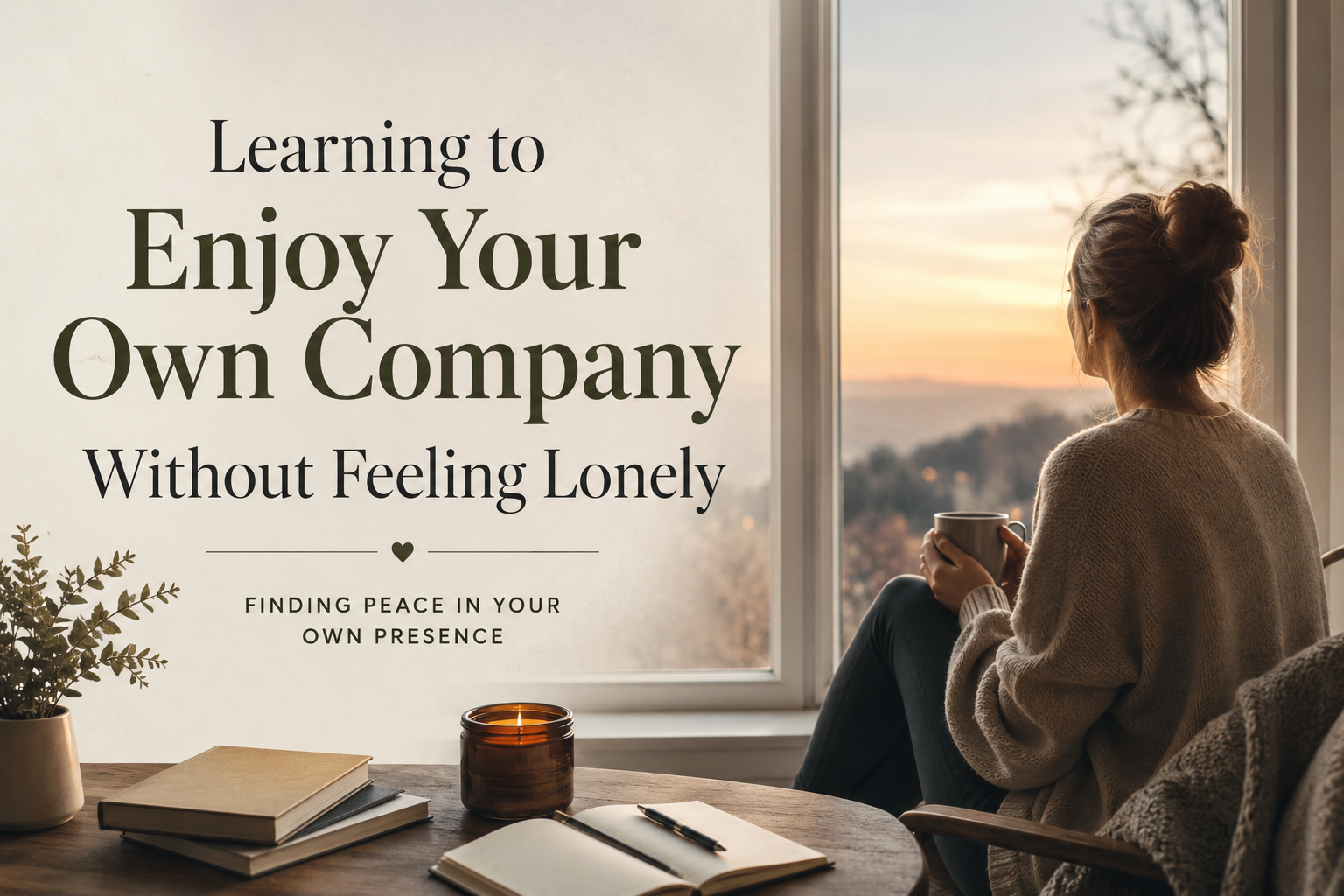
There is a strange difference between being alone and feeling lonely, though most people blur the two together.
You can sit at a crowded dinner table and still feel emotionally stranded. You can answer messages all day and somehow feel unseen by everyone. At the same time, there are quiet evenings where you make tea, listen to the ceiling fan hum softly above you, and feel perfectly fine with nobody around.
It took me a long time to understand that solitude is not automatically sadness.
For years, I treated being alone like a temporary condition I needed to escape from quickly. If I had a free evening, I would immediately look for noise. A phone call. A long scroll through social media. Background television I wasn’t even watching. Anything to avoid sitting quietly with myself for too long.
And honestly, I think many people do this without noticing.
Silence can feel uncomfortable at first because it removes distraction. You begin hearing your own thoughts more clearly. Sometimes that is peaceful. Sometimes it is messy. Usually it’s both.
Learning the art of being alone peacefully did not happen through some dramatic life transformation. It happened slowly through ordinary moments. Missed plans. Long walks. Quiet mornings. Eating alone without rushing. Sitting in a room without reaching for my phone every three minutes.
Over time, solitude stopped feeling like evidence that something was missing in my life.
It simply became another way of living.
Why Being Alone Feels So Uncomfortable for Many People
A lot of us were never taught how to enjoy our own company.
From childhood, togetherness is treated as the default version of happiness. Friends, relationships, family gatherings, group chats, constant interaction. None of these things are bad, obviously. Human connection matters deeply.
But somewhere along the way, many people quietly absorb the idea that being alone means you are unwanted, boring, or failing socially.
So when solitude arrives naturally, it feels like rejection instead of space.
You notice this especially on weekends.
There is this subtle pressure attached to free time. People ask what your plans are, and somehow “I’m staying home alone” can feel like an answer that needs defending. Even if staying home sounds genuinely relaxing.
Social media makes this feeling worse sometimes. Everyone appears permanently surrounded by people, always laughing in restaurants, traveling somewhere, celebrating something.
Meanwhile, real life is far less cinematic.
Most people spend large portions of their lives alone. They just rarely photograph those moments.
The quiet Tuesday nights. The grocery shopping. The meals eaten without conversation. The evenings spent folding laundry while half-listening to music.
These ordinary solitary moments are actually part of being human. Yet many people feel embarrassed by them.
Solitude Becomes Easier When You Stop Treating It Like a Problem
One thing that changed my relationship with solitude was stopping the constant mental commentary around it.
I used to think things like:
“I should probably go out more.”
“I shouldn’t spend another evening alone.”
“Normal people are busier than this.”
That internal narrative made solitude feel heavier than it really was.
But eventually I noticed something simple. Some of my calmest moments happened when nobody else was around.
Reading late at night.
Cooking slowly without rushing.
Walking without checking my phone.
Listening to rain without trying to multitask through it.
None of these experiences were lonely. They were actually comforting.
The problem wasn’t the solitude itself. It was the fear attached to it.
There is a huge emotional difference between:
“I am alone because nobody wants me”
and
“I am alone because I am spending time with myself.”
The external situation may look identical. Internally, they feel completely different.
Learning Your Own Rhythms
When you spend time alone without constantly distracting yourself, you begin noticing small things about your personality that usually get buried under noise.
You discover what genuinely relaxes you.
Not what looks relaxing online. Not what other people recommend. Your actual rhythms.
Maybe you enjoy waking up early before everyone else. Maybe crowded places drain you faster than you realized. Maybe you like long drives with no destination. Maybe silence helps your brain settle.
A surprising amount of adulthood is just learning who you are when nobody is performing for an audience.
I think many people are exhausted partly because they rarely stop reacting to everyone else’s energy.
When you are alone peacefully, your nervous system gets a break from social performance. You are not adjusting yourself constantly. You do not have to reply immediately. You do not have to entertain anyone.
You can simply exist for a while.
That sounds small, but it matters.
The Difference Between Healthy Solitude and Isolation
Of course, solitude can become unhealthy too.
There is a difference between peaceful aloneness and emotional withdrawal.
Healthy solitude feels restorative. Isolation feels heavy and disconnected.
One leaves you calmer afterward. The other leaves you emotionally numb.
Sometimes people convince themselves they “don’t need anyone” after disappointment or heartbreak. Usually that’s not peace. Usually that’s self-protection wearing a confident disguise.
Human connection still matters deeply. Friendships matter. Love matters. Community matters.
Being alone peacefully does not mean rejecting relationships. It means your emotional stability does not completely collapse in the absence of constant company.
You stop needing noise every second just to feel okay.
That emotional independence creates healthier relationships too, strangely enough.
People who can comfortably spend time alone often show up more honestly in relationships because they are not using other people purely to escape themselves.
Small Moments That Quietly Change Everything
I don’t think people suddenly master solitude one day.
It happens gradually through ordinary experiences.
The first time you go to a café alone and stop feeling awkward.
The evening you watch a movie by yourself and genuinely enjoy it.
The walk where you leave your headphones behind and notice the world more clearly.
The Sunday afternoon where you clean your room slowly, make coffee, and realize the silence feels peaceful instead of empty.
These moments seem insignificant while they are happening. But they slowly rebuild your relationship with yourself.
You begin understanding that your own presence can actually feel comforting.
That realization changes things quietly.
Because once you stop fearing solitude, you stop chasing distraction quite so desperately.
You become more selective about what deserves your energy. You stop filling every silence automatically. You stop saying yes to things purely because you are afraid of being alone at home.
And honestly, some loneliness disappears the moment you stop fighting solitude so aggressively.
Phones Make Solitude Harder Than It Used to Be
One thing I’ve noticed is that many people rarely experience true solitude anymore.
The second quietness appears, we reach for stimulation.
Scrolling. Refreshing. Checking notifications that don’t matter.
Even waiting in line for two minutes feels unbearable without grabbing a phone.
I do this too sometimes.
But constant digital noise can make it harder to develop comfort with your own thoughts. Your brain becomes used to interruption. Silence starts feeling unnatural.
There is something strangely healing about moments where nothing is competing for your attention.
No endless input.
No pressure to respond.
Just space.
That space can feel uncomfortable initially. Then eventually it starts feeling necessary.
Not every quiet moment needs to be filled.
Being Alone Peacefully Is a Skill
Some people naturally enjoy solitude early in life. Others learn it later after burnout, heartbreak, moving cities, or simply growing older.
Either way, it is a skill.
And like most skills, it develops slowly.
You learn how to spend an evening without feeling emotionally restless.
You learn that your value is not measured by how socially occupied your calendar looks.
You learn that stillness is not failure.
There are nights where solitude still feels heavy sometimes. That part never disappears completely. Humans are emotional creatures. We miss people. We crave closeness. Certain silences ache more than others.
But peaceful solitude teaches you that loneliness does not have to control every quiet moment.
Sometimes being alone simply means the day is quiet.
Nothing more tragic than that.
Conclusion
Learning to enjoy your own company changes the emotional atmosphere of your life in subtle ways.
You stop treating solitude like evidence that something is wrong with you. You stop panicking during quiet seasons. You become less dependent on constant distraction.
And slowly, your relationship with yourself becomes softer.
Not perfect. Just steadier.
There is a certain kind of peace that only appears when you realize you can sit alone with your thoughts, your routines, your ordinary little evenings, and still feel emotionally whole.
Not every silence needs escaping.
Sometimes a quiet room is simply a quiet room.
And sometimes, that is enough.
FAQs
1. Is being alone peacefully the same as being introverted?
Not necessarily. Introverts may naturally enjoy solitude more, but anyone can learn to feel comfortable alone. Even highly social people benefit from developing a peaceful relationship with solitude.
2. How can I stop feeling lonely when I am alone?
Start by reducing the idea that being alone automatically means something negative. Small habits help too: walking without distractions, reading, cooking, journaling, or spending quiet time offline. Comfort with solitude usually develops gradually.
3. Can too much solitude become unhealthy?
Yes. Healthy solitude feels calming and restorative. Isolation feels emotionally heavy and disconnected. If being alone consistently makes you feel numb, withdrawn, or emotionally stuck, reconnecting with supportive people becomes important.
0 Comments